The Battle of Ball's Bluff (1861): Ghost Tents, a Dead Senator and a Jailed General
Click to load the video from YouTube (privacy-enhanced mode). Or watch on YouTube ›
On the night of October 20, 1861, Captain Chase Philbrick and about twenty men of the Fifteenth Massachusetts crossed the Potomac by way of Harrison's Island and climbed a steep, wooded bluff on the Virginia shore near Leesburg. In the darkness, Philbrick reported what looked like a Confederate camp: a row of tents, apparently unguarded. Before dawn, Colonel Charles Devens led about three hundred men up the bluff to destroy it. At first light they found their target. It was a row of trees, which in the moonlight had looked like tents. The camp never existed, but the raid on it turned into a battle nobody had planned.
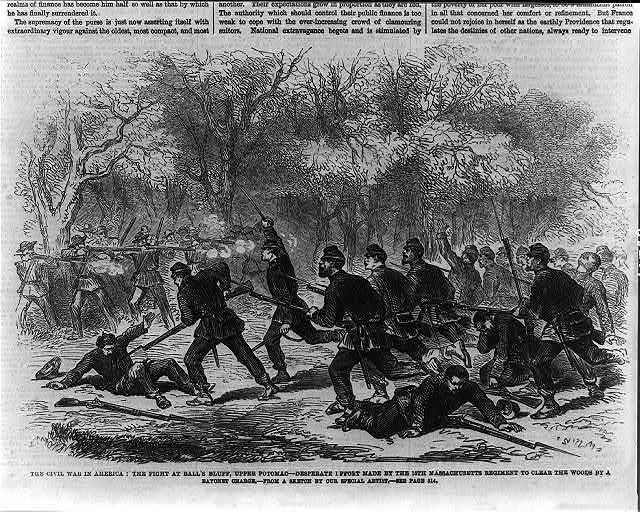
It began with a suggestion. George McClellan's headquarters had told General Charles Stone that "a slight demonstration" might help move the Confederates out of Leesburg. Instead of rowing home, Devens held his ground, ran into Mississippi pickets and sent back for orders. Stone handed the operation to a nearby brigade commander with permission to pull back or push ahead. That colonel was Edward Baker, a sitting U.S. senator from Oregon and one of Lincoln's oldest friends. The Lincolns had named their second son Edward Baker Lincoln, and the day before the battle, Baker had stretched out on the White House lawn beside the President while Willie Lincoln played in the fallen leaves.
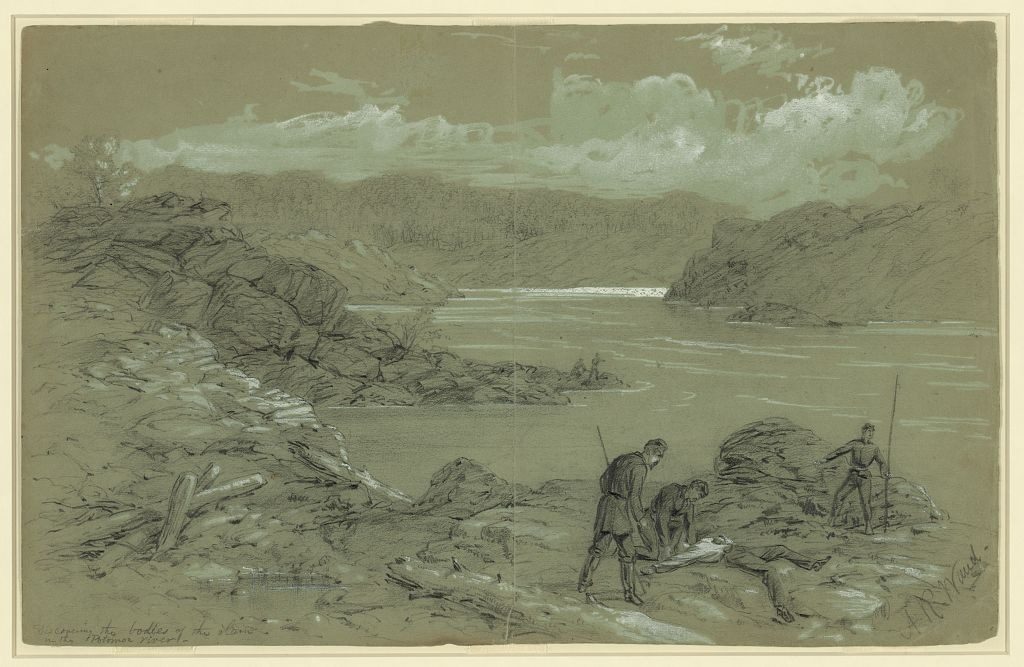
There were only a few small boats, so men crossed a few dozen at a time. By midafternoon, Baker had about seventeen hundred men in an open field with woods on three sides and a cliff at their backs. Late in the afternoon, fire came out of the trees and Baker was struck several times. He remains the only sitting U.S. senator ever killed in battle. The Union line broke, and the only way out was back over the bluff. Men slid and fell to the river, overloaded boats capsized, and Confederates fired down into the water. For weeks afterward bodies drifted down the Potomac, some past Washington itself.
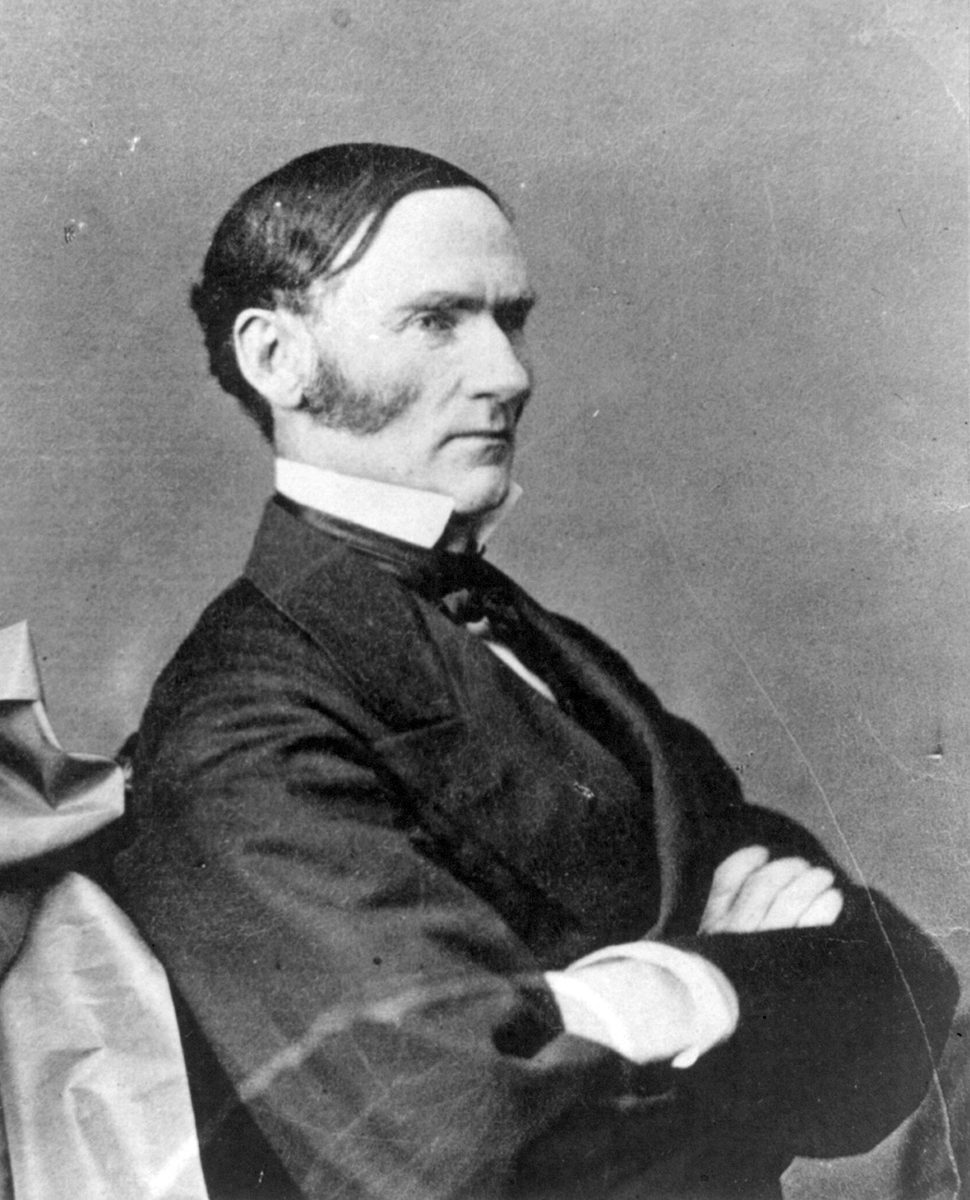

The news came by telegraph to McClellan's headquarters, not to the President. When Lincoln came asking, a young telegraph officer, Thomas Eckert, slid the dispatch under his desk blotter and said there was nothing. Lincoln found a copy anyway, and a reporter wrote that he "almost fell as he stepped into the street." Lincoln never scolded Eckert, but afterward, told there was no news, he would sometimes ask, "Is there not something under the blotter?"
Congress wanted someone to blame. Its new Joint Committee on the Conduct of the War fixed its suspicion not on McClellan or the fallen Baker but on Stone, whom Radical Republicans already hated for returning runaway slaves to their Maryland owners under orders. Around midnight on February 8, 1862, Stone was arrested and held at Fort Lafayette for 189 days, never charged and never tried. He later served as chief of staff of the Egyptian army and came home to be chief engineer of the pedestal of the Statue of Liberty. At Ball's Bluff today, a tiny national cemetery holds fifty-four Union soldiers in twenty-five graves. Only one has a name: Private James Allen, Fifteenth Massachusetts, the same regiment whose scouts saw the tents that were never there.
Further reading
- Lincoln in the Telegraph Office, by David Homer Bates
- A Little Short of Boats: The Civil War Battles of Ball's Bluff and Edwards Ferry, by James A. Morgan III
As an Amazon Associate I earn from qualifying purchases.
Sources
- F. G. Young to Abraham Lincoln, October 21, 1861, Abraham Lincoln Papers, Library of Congress (mal.1259900)
- Official Records, Ser. I, Vol. 5 (Oct. 20, 1861 order to Stone; Union casualty return)
- Collected Works of Abraham Lincoln, Vol. IV (Lincoln to Poolesville, Oct. 21, 1861)
- David Homer Bates, Lincoln in the Telegraph Office (1907), pp. 93–96
- Charles Carleton Coffin, in Allen Thorndike Rice, ed., Reminiscences of Abraham Lincoln (1886)
- James A. Morgan III, A Little Short of Boats (2011)
- Cullum's Register, No. 1237 (Charles P. Stone); Inauguration of the Statue of Liberty (1887)
- U.S. Senate Historical Office; National Park Service (incl. Statue of Liberty National Monument); American Battlefield Trust
- Mr. Lincoln's White House; Friends of the Lincoln Collection, Lincoln Lore (1948); Tom Wheeler, “Commanding by T-Mail,” HistoryNet
- The New York Times, Disunion (2011); Emerging Civil War
- VA National Cemetery Administration; National Register of Historic Places; NOVA Parks; Virginia DHR
- U.S. Department of State, Office of the Historian (the Trent Affair)