The Burning of the Gosport Navy Yard (1861) and the Fate of USS Merrimack
Click to load the video from YouTube (privacy-enhanced mode). Or watch on YouTube ›
At twenty minutes past four on a Sunday morning in April 1861, a rocket climbed into the dark over Portsmouth, Virginia, and across three-quarters of a mile of waterfront one of the U.S. Navy's most valuable yards began to burn. The men who lit the fires were Union sailors, burning their own navy yard and their own ships, among them the steam frigate Merrimack.
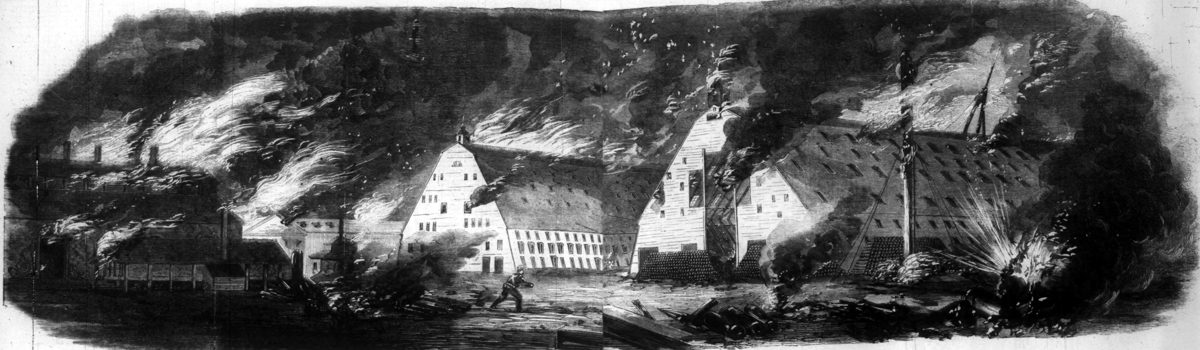
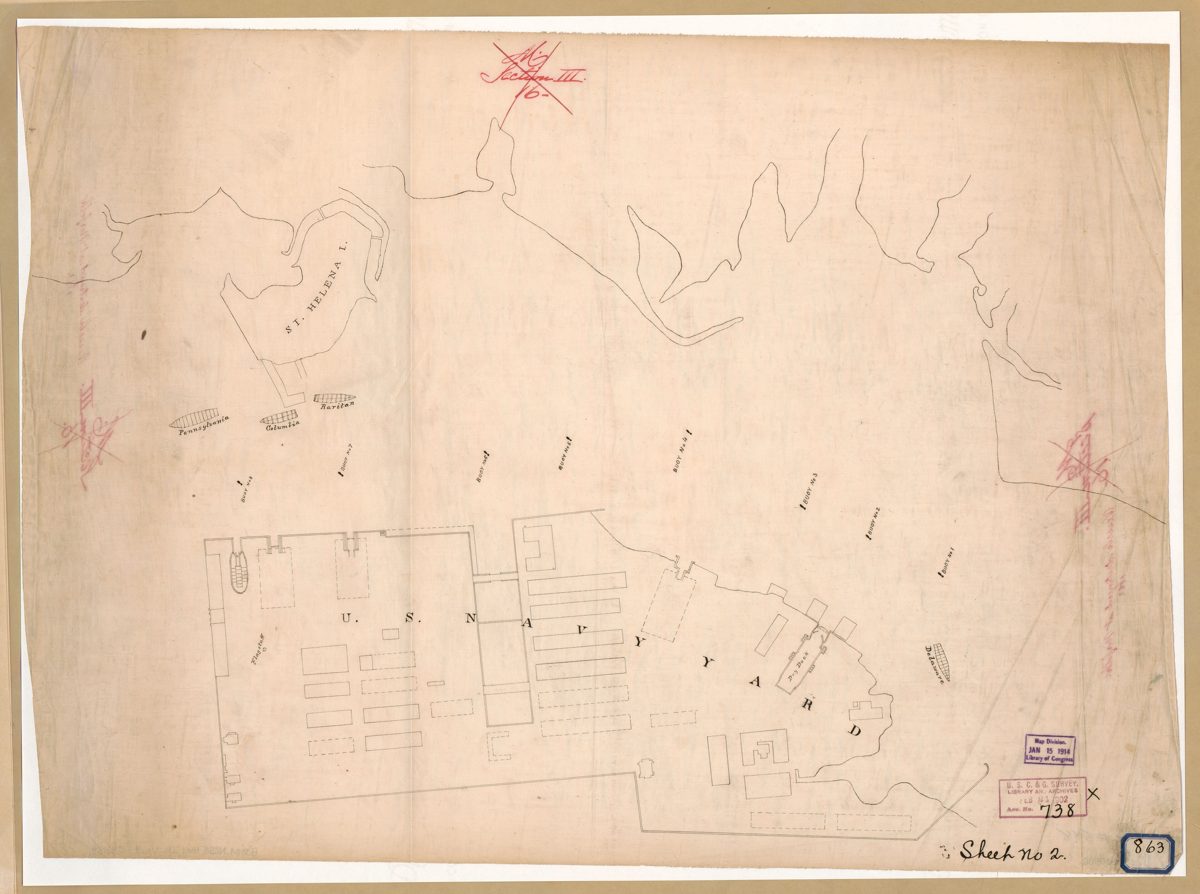
The Gosport Navy Yard, on the Elizabeth River across from Norfolk, had one of only two granite dry docks in the country and a gun park of more than a thousand cannon. The Merrimack lay at the wharf with her engines in pieces, under the command of sixty-eight-year-old Commodore Charles McCauley. On April 14, two days after Fort Sumter, Engineer-in-Chief Benjamin Isherwood arrived from Washington, worked his crews around the clock, and on April 17, the day Virginia's convention voted to secede, reported her ready for steam. McCauley said the next morning would be time enough. Then he would not decide. "He sat in his office immovable," Isherwood wrote, and that afternoon McCauley ordered the engines shut down.
On Friday, trains rolled into Norfolk packed with yelling men. It was a bluff: railroad president William Mahone sent empty trains out of town and brought them back full of local civilians, to make it look as if a Virginia army was pouring in. It worked. On Saturday, McCauley locked the gates and ordered his ships scuttled.
He did not know help was coming. That night the warship Pawnee steamed in from Fort Monroe with Commodore Hiram Paulding, Massachusetts volunteers and a cargo of powder, turpentine and cotton waste, and came so close to being fired on that a young lieutenant at a ten-inch gun aboard the frigate Cumberland asked, "Shall I fire, sir?" Only the Cumberland could still be saved. A hundred sailors attacked the cannon with sledgehammers for an hour without breaking one. Commander John Rodgers and Army engineer Horatio Wright carried two thousand pounds of powder into the dry dock to blow it apart, and McCauley's son came aboard in tears because his father would not leave his post.
At 4:20 a.m. the rocket went up and the torches went in. "The whole area of the yard was one sheet of flame," wrote Captain Charles Wilkes. The ship of the line Pennsylvania burned to the waterline with her loaded guns going off into the night. Rodgers and Wright, cut off by the fire, were captured and taken to Richmond.

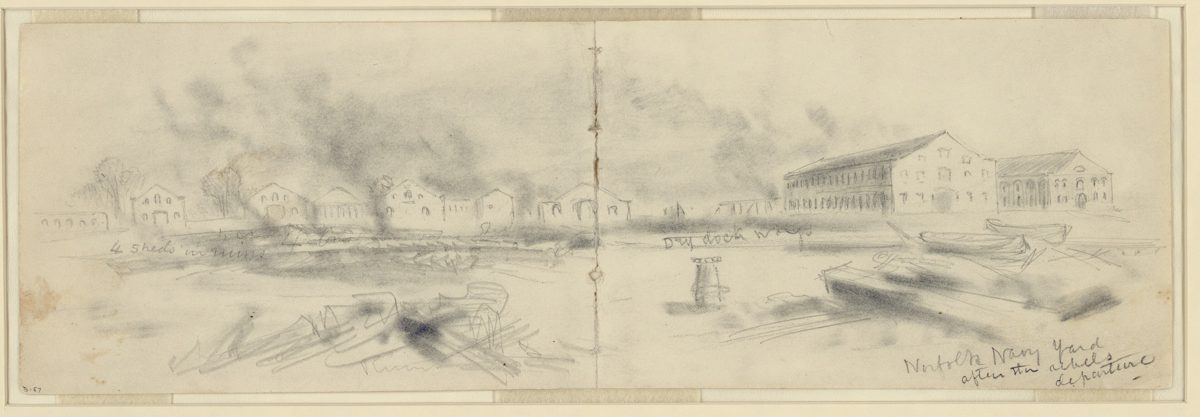
When the smoke cleared, the dry dock was still standing; the charge had never gone off. The Confederates raised the burned-out Merrimack, floated her into that same dry dock and rebuilt her as the ironclad CSS Virginia. The first ship she sank was the Cumberland, the one that escaped Gosport.
Further reading
- The CSS Virginia: Sink Before Surrender, by John V. Quarstein
As an Amazon Associate I earn from qualifying purchases.
Sources
- Official Records of the Union and Confederate Navies, Ser. I, vol. 4: reports of Capt. Charles Wilkes and Commodore Hiram Paulding; Gideon Welles's orders of April 1861; French Forrest to Robert E. Lee, May 30, 1861
- Commodore Charles S. McCauley's report, April 25, 1861 (Senate report, 37th Congress); Capt. Horatio G. Wright's report, Official Records of the Union and Confederate Armies, Ser. I, vol. 2
- Log of the USS Pawnee, April 20–21, 1861 (Reporting History transcription); Spirit of '61 transcriptions and Virginia timeline; Wardrop to Butler, April 23, 1861
- Memoirs of Thomas O. Selfridge, Jr. (1924); Benjamin F. Isherwood's account, as quoted by Musicant
- Ivan Musicant, "The Fires of Norfolk," American Heritage (March 1990)
- The Mariners' Museum, John V. Quarstein's Gosport blog series (2020)
- U.S. Naval Institute, Naval History: "Disaster at Gosport" (April 1996) and "The Most Beautiful of All Ships of Her Class" (January 2013)
- J. R. Soley, Confederate Military History, vol. 7.1; NOAA Monitor National Marine Sanctuary timeline
- Edward W. James Porter, A Record of Events in Norfolk County, Virginia (1892); William H. Stewart, History of Norfolk County (1902)
- New York Times, April 24, 1861; Richmond Daily Dispatch, April 25 and May 14, 1861; Library of Virginia, Virginia Convention of 1861